
Description
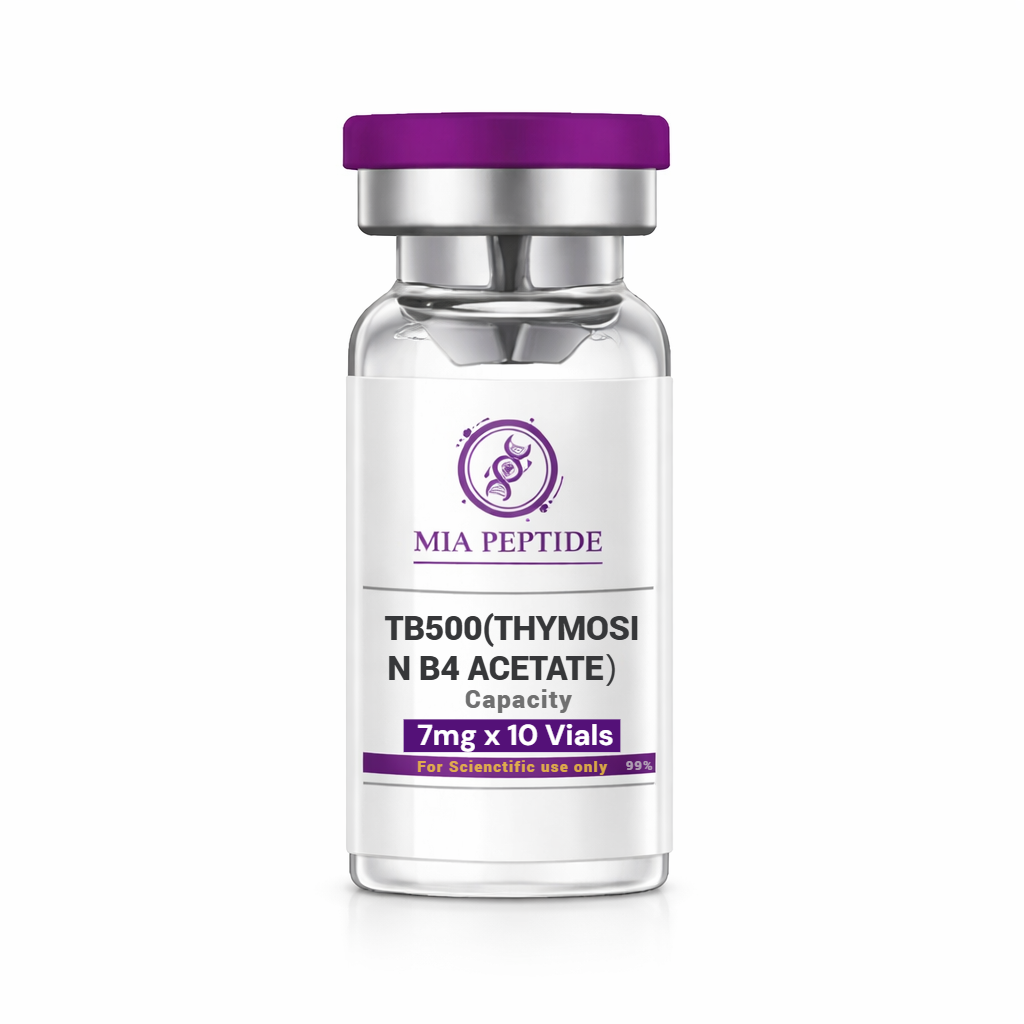
TB-500, the synthetic acetate form of Thymosin Beta-4, is a peptide widely studied in molecular and cellular biology research for its role in actin regulation, cellular migration, and cytoskeletal organization. It is frequently used in laboratory experiments to investigate intracellular signaling pathways and peptide-mediated cellular processes.
In research settings, TB-500 is valued for its ability to modulate actin filament dynamics and influence cell motility. Its activity provides a model for studying cytoskeletal restructuring, receptor-mediated signaling, and cellular adaptation in vitro.
One of the defining characteristics of TB-500 is its structural stability. The acetate form enhances peptide shelf-life and ensures consistent molecular behavior across experimental protocols, supporting reproducible laboratory results.
TB-500 is frequently included in studies examining intracellular transport, cellular migration signaling, and tissue repair mechanisms. Researchers utilize the peptide to understand how targeted peptide sequences influence cytoskeletal dynamics and intracellular communication.
The peptide is also used in comparative research alongside other actin-regulating molecules to study differences in pathway activation, signaling efficiency, and structure–function relationships. These investigations provide insights into the molecular mechanisms of peptide-driven cellular modulation.
TB-500’s compact molecular structure allows for precise experimental design and high reproducibility in laboratory conditions. Its predictable receptor and intracellular interactions make it a reliable tool for molecular research.
Unlike broad-acting growth factors, TB-500 specifically engages pathways related to actin regulation and intracellular signaling, allowing researchers to focus on discrete cellular mechanisms without confounding systemic effects.
The peptide is also of interest in studies of intracellular protein organization, cytoskeletal remodeling, and peptide-mediated signaling networks. Its behavior serves as a model for understanding complex cellular communication.
Because cytoskeletal regulation intersects with multiple cellular processes, TB-500 is frequently employed in systems-based research to observe integrated cellular responses rather than isolated pathway activity.
TB-500’s well-characterized molecular profile and stability make it a reliable research compound for peptide biology, cellular signaling, and molecular pathway investigations.
TB-500 continues to attract scientific interest due to its receptor-independent activity, intracellular specificity, and relevance in understanding peptide-mediated cytoskeletal regulation.
Its stable structure, predictable molecular behavior, and targeted activity make TB-500 (Thymosin Beta-4 Acetate) an essential research compound for laboratory-based studies in peptide signaling and cellular biology.


Reviews
There are no reviews yet.