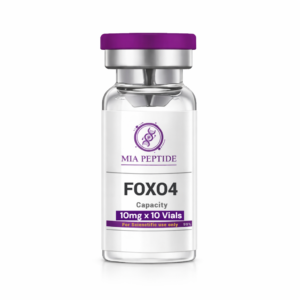


Description
MGF, also known as Mechano Growth Factor, is a synthetic peptide derived from the insulin-like growth factor-1 (IGF-1) isoform, extensively studied in molecular biology and cellular signaling research. It is primarily used in laboratory settings to explore receptor-mediated signaling pathways and intracellular mechanisms related to tissue adaptation and cellular communication.
In research environments, MGF is valued for its interaction with IGF-1 receptors and downstream intracellular pathways. These studies provide insight into how mechanical stimuli and peptide signaling influence gene expression, protein synthesis, and cellular adaptation processes in vitro.
One of the defining characteristics of MGF is its unique peptide sequence, which differentiates it from full-length IGF-1. This allows researchers to investigate targeted signaling events while maintaining structural stability and reproducibility under controlled experimental conditions.
MGF is frequently included in studies examining tissue-specific signaling, receptor activation kinetics, and intracellular cascade modulation. Researchers analyze how the peptide influences transcriptional activity and cellular responsiveness in molecular models.
The peptide is also used in comparative research alongside other IGF-1 isoforms and synthetic analogs to evaluate differences in receptor affinity, signaling intensity, and pathway specificity. These studies offer important insights into the structure–function relationships within the IGF-1 peptide family.
MGF’s chemical stability and well-characterized molecular profile support consistent behavior in laboratory experiments. This predictability ensures reproducible results across multiple research protocols.
Researchers often employ MGF in systems-based research to explore how peptide signaling integrates with broader cellular networks, including growth factor and receptor-mediated pathways, rather than studying isolated mechanisms.
Unlike general growth factors, MGF operates through targeted receptor engagement, allowing scientists to focus on specific signaling pathways without introducing systemic confounding factors in experimental models.
The peptide is also of interest in studies investigating intracellular protein synthesis, receptor desensitization, and signal transduction efficiency. Its molecular activity provides a model for understanding adaptive cellular responses.
Because tissue signaling and growth factor pathways are highly interconnected, MGF is frequently used in integrated research models to evaluate coordinated molecular and cellular responses.
Its well-defined molecular structure and predictable receptor interactions make MGF a reliable tool for research in peptide signaling, cellular adaptation, and molecular biology.
MGF continues to attract scientific interest due to its unique sequence, receptor specificity, and relevance in studying IGF-1–related cellular communication.
Its compact structure, stability, and targeted receptor engagement make MGF an essential research compound for laboratory-based exploration of peptide signaling and intracellular molecular pathways.


Reviews
There are no reviews yet.