
Description
BPC-157 and TB-500 are two well-studied synthetic peptides commonly examined together in laboratory research focused on cellular repair signaling, tissue response mechanisms, and peptide-mediated communication pathways. This combined research format allows scientists to explore complementary peptide interactions within controlled experimental environments.
BPC-157 is a stable pentadecapeptide derived from a naturally occurring gastric protein fragment. In research settings, it is studied for its role in cellular signaling pathways associated with tissue integrity, angiogenic signaling, and cellular adaptation processes.
TB-500 is a synthetic fragment of thymosin beta-4, a peptide involved in actin regulation and intracellular structural dynamics. It is researched for its influence on cytoskeletal organization, cell migration signaling, and intercellular communication pathways.
When studied together, BPC-157 and TB-500 provide a valuable model for examining how distinct peptides interact across different cellular systems. Researchers explore how their signaling pathways may complement each other in studies of tissue organization and cellular response coordination.
One of the defining characteristics of this research blend is pathway diversity. BPC-157 is often associated with signaling related to vascular and cellular protection mechanisms, while TB-500 is linked to intracellular structural and motility signaling, allowing for broad research coverage.
This combination is frequently included in studies examining cellular recovery signaling, structural integrity pathways, and peptide-mediated regulation of tissue response under controlled laboratory conditions.
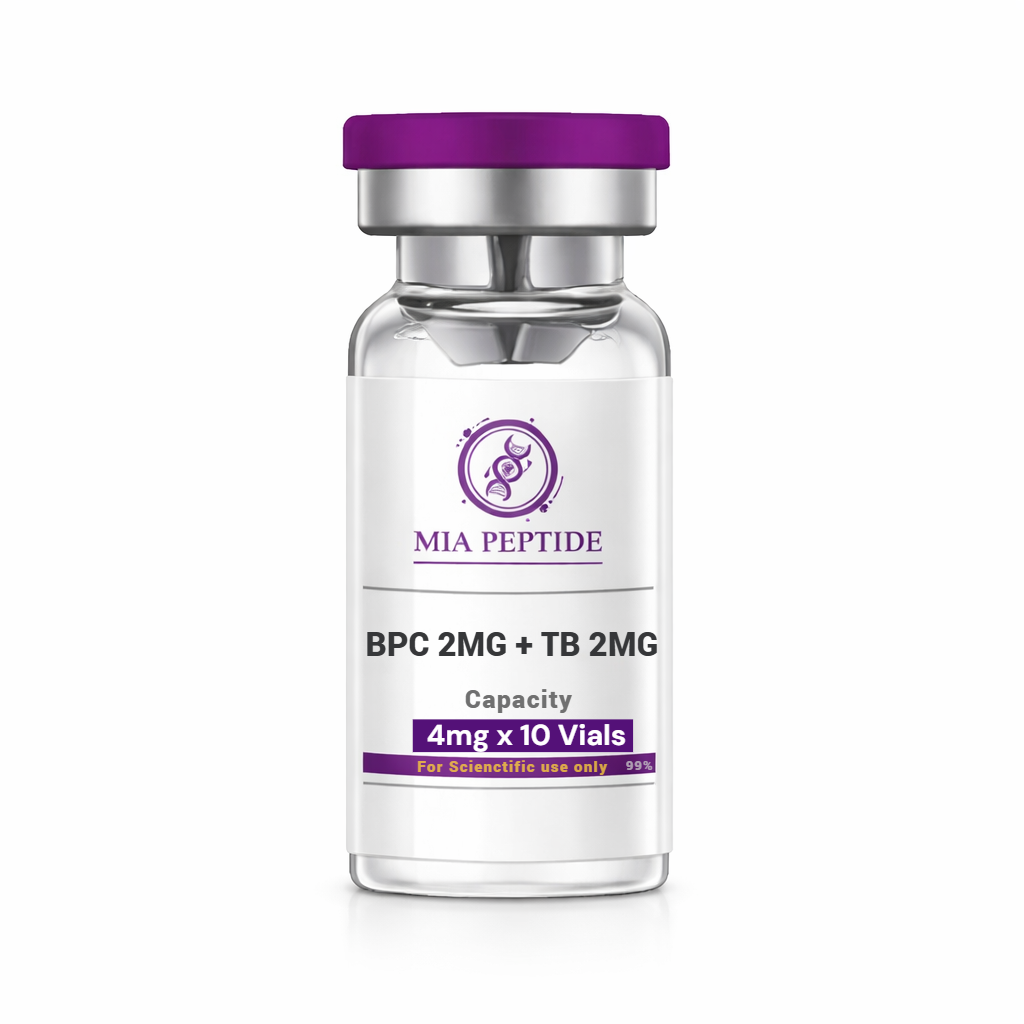
Both peptides are known for their stability and predictable molecular behavior, supporting reproducibility across research protocols. The standardized 2 mg + 2 mg format allows for consistency in comparative and repeat studies.
Researchers often employ this combination in systems-based research models, where multiple signaling pathways are evaluated simultaneously to better understand integrated cellular responses.
Unlike single-pathway compounds, the BPC-157 + TB-500 blend allows investigation into how peptides influence both extracellular signaling environments and intracellular structural processes.
The peptides’ well-characterized molecular profiles make this blend suitable for advanced peptide research, including studies on structure–function relationships and signaling synergy.
This research combination is also useful in comparative peptide studies, allowing scientists to contrast combined signaling effects with individual peptide activity.
BPC-157 (2 mg) + TB-500 (2 mg) continues to attract interest in laboratory research due to its versatility, stability, and relevance in studying complex peptide-mediated cellular communication.
Its complementary peptide design, predictable behavior, and broad signaling relevance make this combination an important research tool for peptide biology and molecular signaling investigations.


Reviews
There are no reviews yet.