
Description
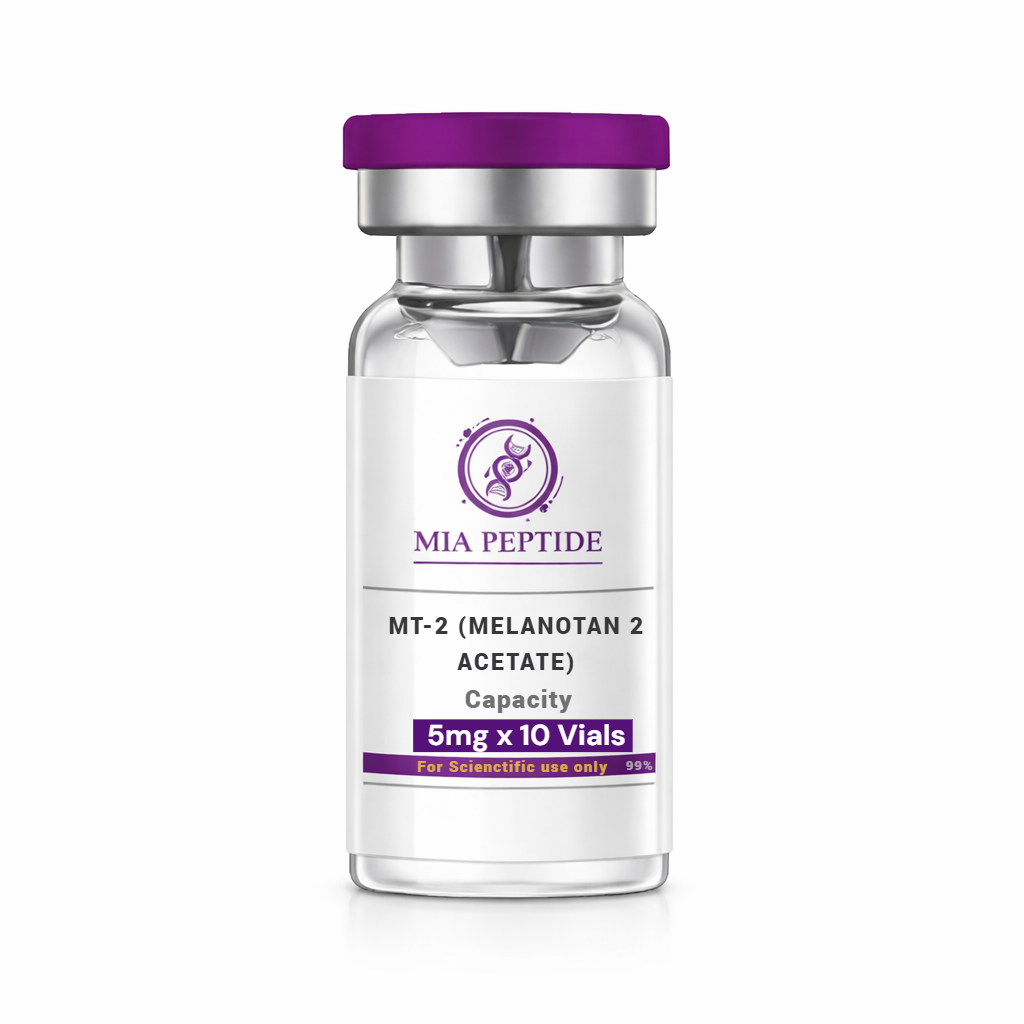
MT-2, also known as Melanotan II Acetate, is a synthetic cyclic peptide belonging to the melanocortin peptide family. It is widely studied in laboratory research for its interaction with melanocortin receptors and its role in peptide-mediated cellular signaling pathways.
In research environments, MT-2 is valued for its broad affinity across multiple melanocortin receptor subtypes. These receptors are involved in diverse intracellular signaling processes, making MT-2 a useful compound for studying receptor activation patterns and downstream molecular responses.
One of the defining characteristics of MT-2 is its cyclic structure, which enhances molecular stability and resistance to enzymatic degradation. This structural feature supports consistent receptor engagement and predictable behavior in experimental settings.
MT-2 is frequently included in studies examining neuroendocrine signaling and peptide-receptor dynamics. Researchers analyze how MT-2 influences intracellular cascades following melanocortin receptor activation.
The peptide is also used in comparative research alongside other melanocortin analogs to evaluate differences in receptor selectivity, signaling duration, and pathway intensity. Such studies help clarify structure–activity relationships within this peptide class.
MT-2 Acetate’s compact yet stable molecular design allows for reproducible results across laboratory protocols. Its acetate salt form further supports handling stability and consistency during research use.
Researchers often employ MT-2 to explore central and peripheral signaling differences mediated by melanocortin receptors. This provides insight into how peptide signaling varies across tissue types in controlled experimental models.
Unlike highly selective receptor agonists, MT-2 interacts with multiple receptor subtypes, making it valuable for systems-based research focused on integrated signaling networks rather than isolated pathways.
MT-2 is also studied in investigations related to intracellular communication, receptor desensitization, and peptide-driven modulation of signaling efficiency.
Because melanocortin signaling intersects with several biological systems, MT-2 is frequently used in broad research models designed to observe coordinated cellular responses.
The peptide’s well-characterized molecular profile supports standardization and reproducibility, making it a reliable tool for advanced peptide biology and receptor research.
MT-2 continues to attract scientific interest due to its stability, receptor engagement profile, and relevance in understanding melanocortin-mediated signaling mechanisms.
Its cyclic structure, predictable molecular behavior, and broad receptor interaction make MT-2 (Melanotan II Acetate) an essential research compound for laboratory-based studies in peptide signaling and molecular biology.


Reviews
There are no reviews yet.