
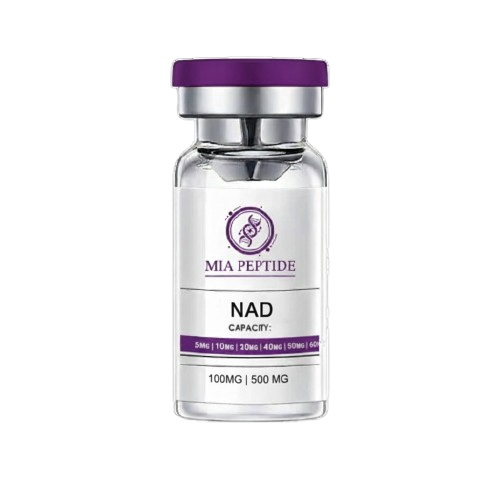
Description
NAD+ (Nicotinamide Adenine Dinucleotide) is a coenzyme present in every living cell, essential to mitochondrial ATP production and a growing focus of cellular-ageing research due to its well-documented decline with age. Unlike the receptor-targeted peptides elsewhere in this catalogue, NAD+ research centres on metabolic and redox biochemistry rather than receptor-mediated signalling.
Current NAD+ research spans sirtuin activation, DNA-repair enzyme (PARP) substrate availability, and mitochondrial function, making it one of the most frequently cross-referenced compounds in longevity science alongside NAD+ precursors like NMN and nicotinamide riboside.
After you place your order, a licensed physician will speak with you directly on a live call to review your health history and confirm a prescription is medically appropriate before anything ships. If your order isn’t approved, our team will contact you directly instead of shipping it. Store as directed, protected from light and moisture; reconstitute per your protocol’s standard NAD+ handling procedure.