
Description
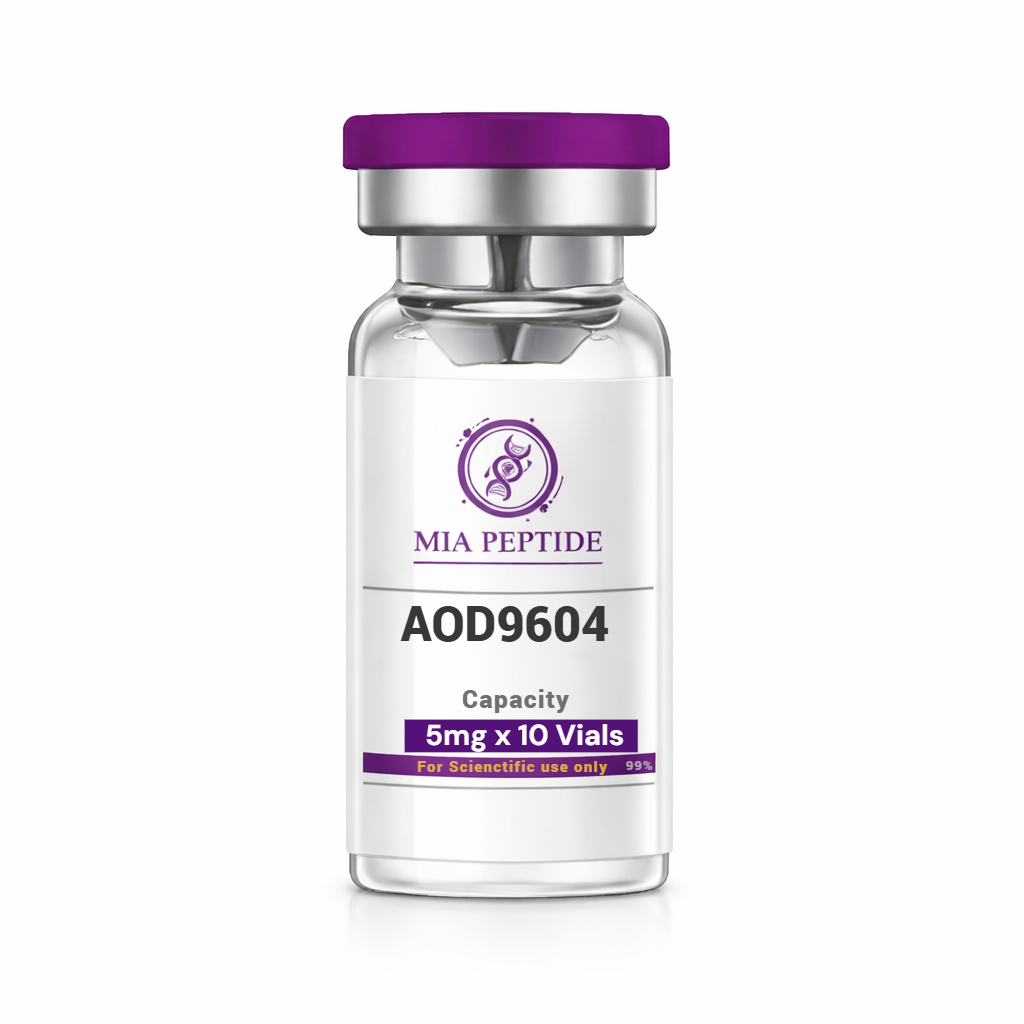
AOD9604 is a synthetic peptide fragment derived from the C-terminal region of human growth hormone, specifically amino acids 176–191. It is studied in biochemical and metabolic research for its selective interaction with pathways associated with lipid metabolism and cellular energy regulation.
In laboratory research, AOD9604 is valued for its ability to isolate specific signaling effects of growth hormone fragments without engaging the full spectrum of growth hormone receptor activity. This makes it a useful compound for examining targeted metabolic signaling mechanisms in controlled experimental systems.
One of the defining characteristics of AOD9604 is its structural specificity. By focusing on a precise fragment of the growth hormone sequence, researchers can investigate structure–function relationships and determine how individual peptide regions influence cellular pathways.
AOD9604 is frequently included in studies examining lipid signaling, intracellular metabolic regulation, and peptide-mediated control of energy-related pathways. Its targeted design supports focused investigation into how peptide fragments modulate cellular responses.
The peptide is also studied in comparative research alongside full-length growth hormone and other peptide fragments to evaluate differences in receptor interaction, signaling selectivity, and molecular behavior.
AOD9604’s compact molecular structure contributes to stability and predictable behavior under laboratory conditions. This consistency supports reproducibility across experiments and long-term research protocols.
Researchers often utilize AOD9604 in studies of intracellular signaling cascades related to energy balance, cellular metabolism, and peptide-mediated regulatory mechanisms.
Unlike full-length growth hormone analogs, AOD9604 does not engage broad endocrine signaling. This allows researchers to study specific metabolic pathways without confounding systemic hormone effects in experimental models.
AOD9604 is also of interest in research focused on peptide fragmentation and molecular design, offering insight into how targeted peptide sequences can influence discrete cellular functions.
Because metabolic signaling intersects multiple biological systems, AOD9604 is frequently included in systems-based research to explore integrated cellular responses rather than isolated pathway activity.
The peptide’s well-characterized molecular profile makes it a reliable tool in peptide chemistry, metabolic research, and structure–activity studies.
AOD9604 continues to attract scientific interest due to its specificity, stability, and relevance in studying peptide fragments and targeted metabolic signaling pathways.
Its precise sequence, predictable molecular behavior, and focused signaling activity make AOD9604 an important research compound for laboratory-based peptide and metabolic science.


Reviews
There are no reviews yet.